

History
By the Order No. 109 of the Director General of the Lithuanian Archives Department under the Government of the Republic of Lithuania, issued on December 29, 1992, the Records Acquisition and Administration Division was established as of January 1, 1993, under the Lithuanian Archives Department. It was envisioned as a structural unit of the future state archive for modern records. The Division was allocated four positions: a head of the division and three senior archivists, with an office space assigned at Mindaugo St. 8, Vilnius.
By Order No. 157 of October 19, 1993, the Records Acquisition and Administration Division was reorganized and the Lithuanian State Modern Archives (LSMA) was officially established. The same order tasked LSMA with acquiring and preserving records from state authorities and administrative institutions, local authorities of Vilnius, other state institutions, as well as permanent records from non-governmental legal entities created after March 11, 1990, and personal records of enduring historical value. The first records accepted for preservation in 1993 were those from the 1993 Presidential elections.
From the end of 1993 until September 2019, the institution was headed by Irena Kasciuškevičiūtė.
Today, the mission of the Lithuanian State Modern Archives is to collect and preserve the documents of the Republic of Lithuania’s authorities, elections, courts, supervisory, environmental protection, finance, taxation, culture, education, national security, defence, social security, transport, communication, health care and oversight institutions, law enforcement and justice, economy, agriculture and other agencies (dated from 1990 onwards). It also accepts records from private legal entities and individuals, as well as documents received from abroad. Additionally, the Archives oversees the implementation of records and archives management and usage regulations, as defined by law; provides methodological assistance to state institutions, agencies, and enterprises in the field of records management; and issues certificates, copies, and other documents based on preserved records to confirm legal facts.
The Archives preserves not only written but also electronic records. As of 2024, LSMA holds 239 record groups comprising approximately 210,671 inventory units, catalogued in 415 finding aids, including electronic documents. The paper documents occupy around 5,008 linear meters of shelving. With the opening of new storage facilities at O. Milašiaus St. 25, the Archives is continuously expanding with new acquisitions.
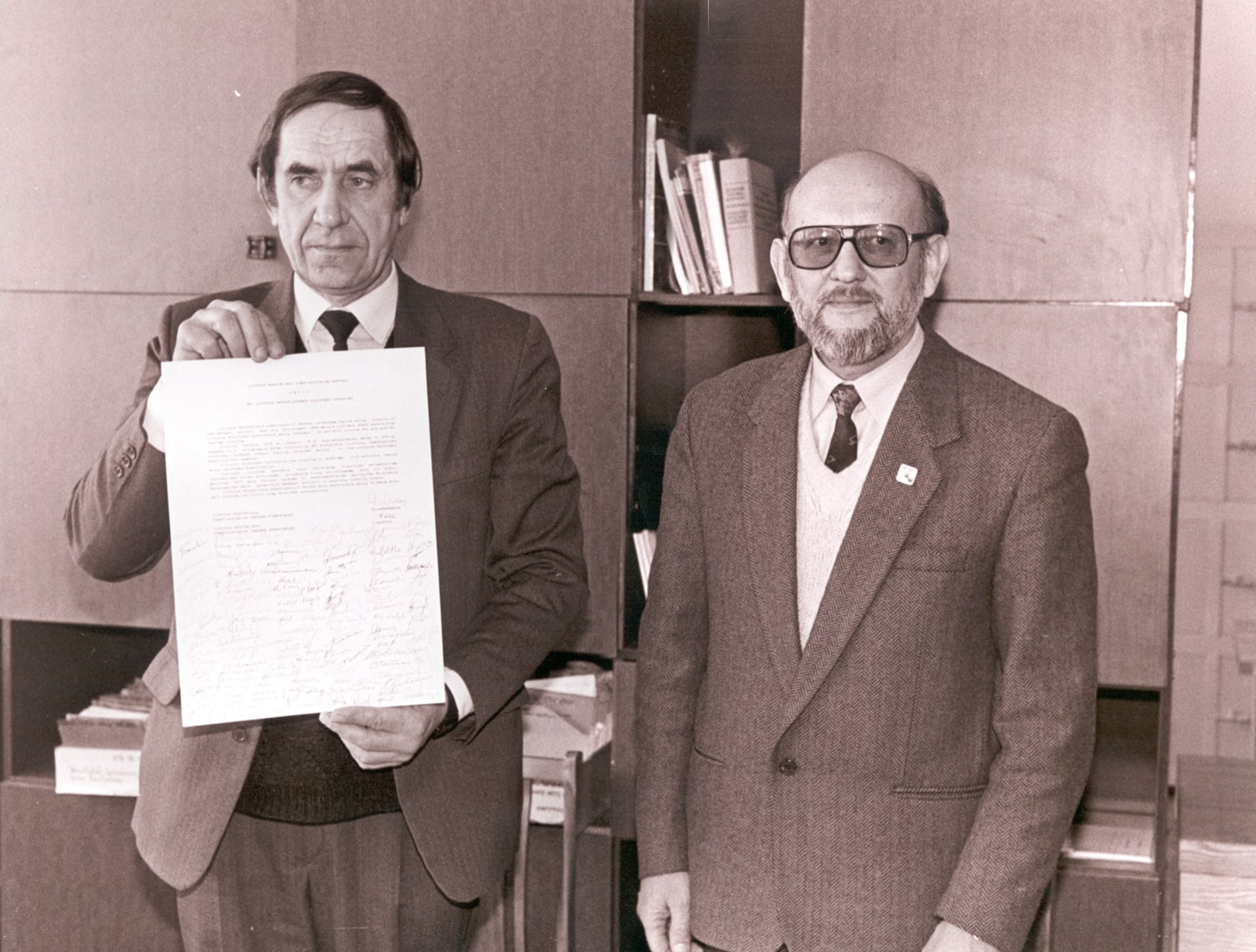
LSMA preserves documents from the Supreme Council – Reconstituent Seimas of the Republic of Lithuania, the Seimas, the President, and municipal elections; documents from liquidated or reorganized ministries; and documents from state authorities, political and public organizations. One of the most important documents preserved is the March 11, 1990 Act on the Re-establishment of the Independent State of Lithuania, signed by the deputies of the Supreme Council. In 2006, this document was included in the Lithuanian National Register of the UNESCO “Memory of the World” Programme as a document of regional significance.
The Archives also holds records of various political and public organizations such as Sąjūdis, the Lithuanian Nationalist Union, the American Lithuanian National Union, the Citizens’ Charter of the Republic of Lithuania, the Independence Party, the Social Democratic Party of Lithuania, the Lithuanian Democratic Labour Party, the Lithuanian Christian Democrats, the Modern Christian Democrats Union, the Union of Poles of Lithuania, the New Union (Social Liberals), the Lithuanian Secular Culture Society, and the Lithuanian Peace Forum.
The personal fonds collection at LSMA includes political and professional documents of March 11 Act signatories such as Vytenis Povilas Andriukaitis, Kazimieras Antanavičius, Virgilijus Juozas Čepaitis, Bronislovas Genzelis, Bronislovas Juozas Kuzmickas, Kazimieras Motieka, Saulius Pečeliūnas, Aleksandras Ambrazevičius, as well as records of other notable individuals including Monsignor Alfonsas Svarinskas, sculptor Jonas Jagėla, and journalist-politician Algimantas Degutis.
Last updated: 10-06-2025